
Dzogchen Teachings on the Base of Santi Maha Sangha, with Steven Landsberg
Amsterdam · Friday 11 – Sunday 13 September 2026 In person (residential) and live online via Zoom*
What is Dzogchen?
Dzogchen — “Great Perfection” — is regarded within Tibetan Buddhism as the highest of the vehicles: not a technique to be added onto the mind, but a direct introduction to a state of awareness said to already be complete, prior to any effort or method. Rather than a philosophy to study from the outside, it is a living transmission, passed from master to student, of how to recognize and remain in this natural state directly.
This lineage is held to descend, teacher to student, without interruption, from its first human source, Garab Dorje, down through generations of realized masters to the present day. It is this same lineage — not simply a tradition or a set of ideas, but a continuous transmission of direct experience — that this course opens a door onto.
The lineage: Chögyal Namkhai Norbu
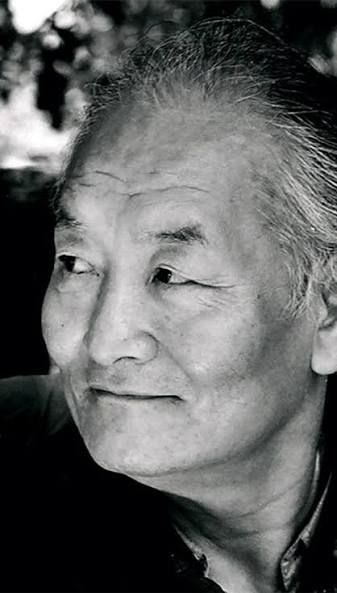
The teachings offered this weekend come from Chögyal Namkhai Norbu (1938–2018), widely regarded as one of the great Dzogchen lineage masters of the twentieth century. Recognized in childhood as the reincarnation of the Dzogchen master Adzom Drugpa, he trained from an early age with some of the most important Tibetan teachers of his generation, and was himself later recognized as a tertön — a revealer of hidden teachings — in his own right.
Invited to Italy in 1960 by the scholar Giuseppe Tucci, he went on to teach Tibetan and Mongolian language and literature at the University of Naples for thirty years, while quietly beginning to share Dzogchen with Western students.
From the mid-1970s, that quiet transmission grew into something historic: Namkhai Norbu became the master who, for the first time, brought Dzogchen to a truly global audience — founding what became the worldwide Dzogchen Community, now active across Europe, the Americas, Russia, Australia, and beyond.
Your teacher this weekend: Steven Landsberg
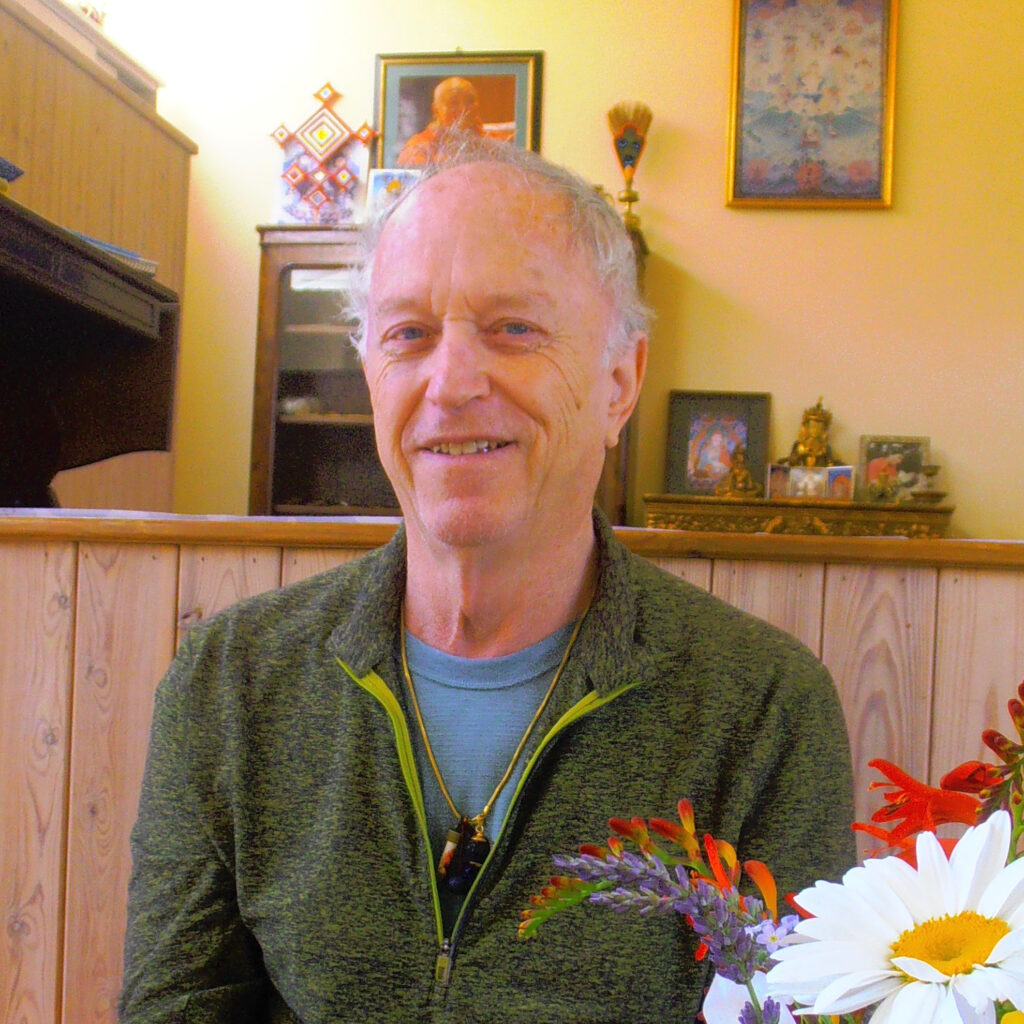
Steven Landsberg’s own path began in 1967, when at nineteen he left the United States for India to study its music and spiritual traditions. Fortunate circumstances brought him into contact with the 16th Karmapa in Sarnath, and later, in Darjeeling, with Kangyur Rinpoche and Tulku Pema Wangyal, who encouraged him to begin ngöndro practice, study Tibetan language, and translate sadhana texts.
He remained in India for roughly a decade, deepening both his practice and his knowledge of Indian classical music — later performing publicly on sitar and surbahar in India and the United States, and producing two solo recordings, Windows to the Heart and Night and Beyond.
It was in the summer of 1982, at a retreat in Northern California, that he first met Chögyal Namkhai Norbu — a meeting that shaped the rest of his path. He stayed close to Rinpoche and the Dzogchen Community from then on, moving in 2007 to serve for five years on the Gakyil of Tashigar Norte and assisting with the editing of several Longsal texts. He is a fourth-level Santi Maha Sangha student and an authorized SMS instructor, and currently serves as president of the International Gakyil of the Dzogchen Community. Over the past decade he has taught throughout South America, the United States, and Europe, with particular focus on Chöd, Anuyoga, Guruyoga, and Dzogchen.
What we’ll explore
No prior knowledge is assumed — each topic builds on the last.
The Four Seals of Dharma Four statements traditionally used to describe an authentically Buddhist view: everything made of parts is impermanent; anything experienced through a confused mind carries the seed of suffering; nothing exists independently or fixed on its own; and true peace goes beyond any fixed idea, even the idea of “peace” itself.
The Three Types of Ignorance How, according to Dzogchen, our natural clarity gets progressively covered over — from a very subtle root confusion, to a habitual sense of “self” arising with experience, to the familiar mental habit of splitting the world into fixed categories.
The Four Conditions of Cause The traditional explanation of the causes and circumstances through which that confusion actually arises, moment to moment.
Shine (calm-abiding practice) A classic meditation method for training the mind to settle, introduced here as a practical foundation before the more subtle instructions of Dzogchen.
The Three Continuities — Base, Path, and Result One continuous nature, looked at in three ways: as it already is, as it’s cultivated in practice, and as it’s fully recognized — as this continuity is presented within Anuttaratantra and Anuyoga.
The Three Inner Tantras: Mahayoga, Anuyoga, Atiyoga Three progressively more direct vehicles within Vajrayana Buddhism. Mahayoga works through visualization and symbolic form; Anuyoga through subtle energy and completion practice; Atiyoga — another name for Dzogchen itself — works directly with awareness, without relying on visualization or effort.
Within Atiyoga: Semde, Longde, and Upadesha Three classical approaches to Dzogchen practice, each suited to a different temperament: Semde (Mind Series) introduces the nature of mind through direct experience; Longde (Space Series) works from its open, spacious quality; Upadesha (secret instructions) offers the most direct, essential pointing-out instructions.
Daily rhythm
On Saturday and Sunday mornings, before teaching begins, there’s an optional practice of the Eight Movements of Yantra Yoga — a yogic sequence linking body, breath, and awareness, developed within the Dzogchen tradition — led by instructor Lily Orlova. No experience required. We close the retreat on Sunday with a Ganapuja, a communal practice of offering and celebration.
| Day | Time |
| Friday | Doors 18:30 · Teaching 19:00 – 21:00 |
| Saturday | Yoga and Breathing Session 9:30 – 10:15 · Teaching 10:30–12:30 & 14:30–16:30 |
| Sunday | Yoga and Breathing Session 9:30 – 10:15 · Teaching 10:30–12:30 & 14:30–16:30 · Ganapuja (ritual offering and sharing of food and drinks) 17:00–18:00 |
Venue: Amsterdam Centre — location to be confirmed
Joining online
Reserved for those living outside North Holland, and includes all teaching sessions plus the closing Ganapuja. Online participation is by contribution, based on means:
- €50 for the entire weekend
- €80 for generous participants
- €35 or less for those in financial hardship
Cost (in person)
- Friday evening only: €50 (deducted from the full price if you join the rest of the weekend)
- Full weekend: €120
Statutory discounts apply for members of the International Dzogchen Community.
Cost should never be an obstacle to sincere participation — if it’s a barrier, get in touch and we’ll do our best to support your attendance.
Registration
Questions? WhatsApp +31 6 48733923 or email info@dzogchen.nl