Tag Archives: breathing

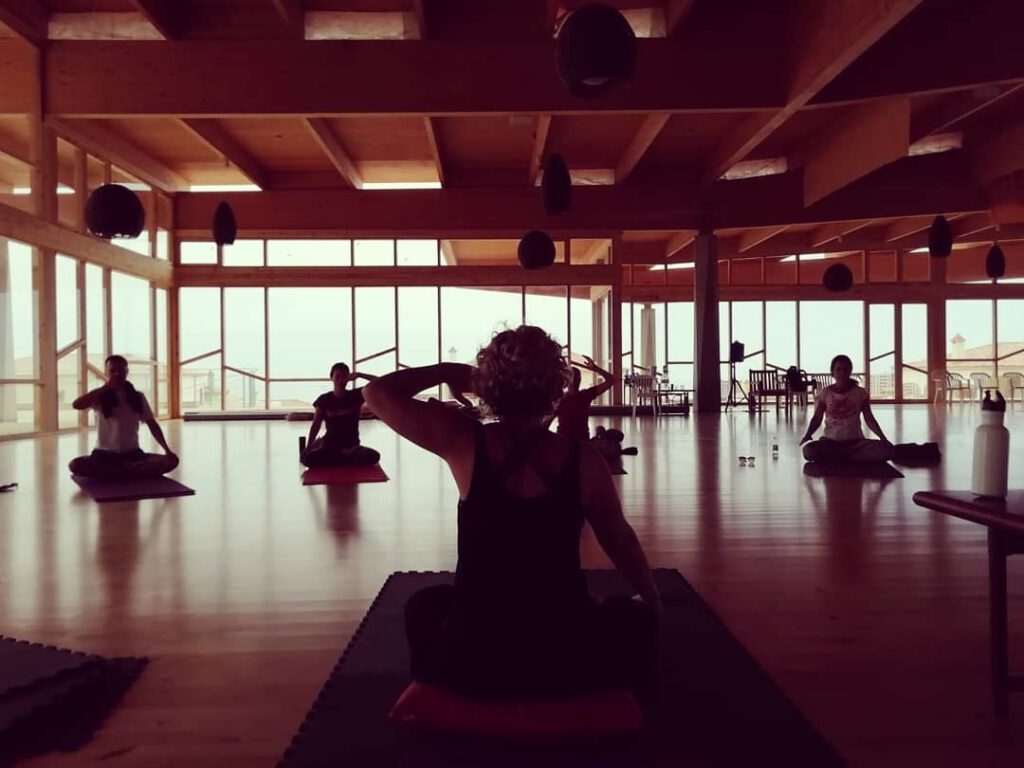
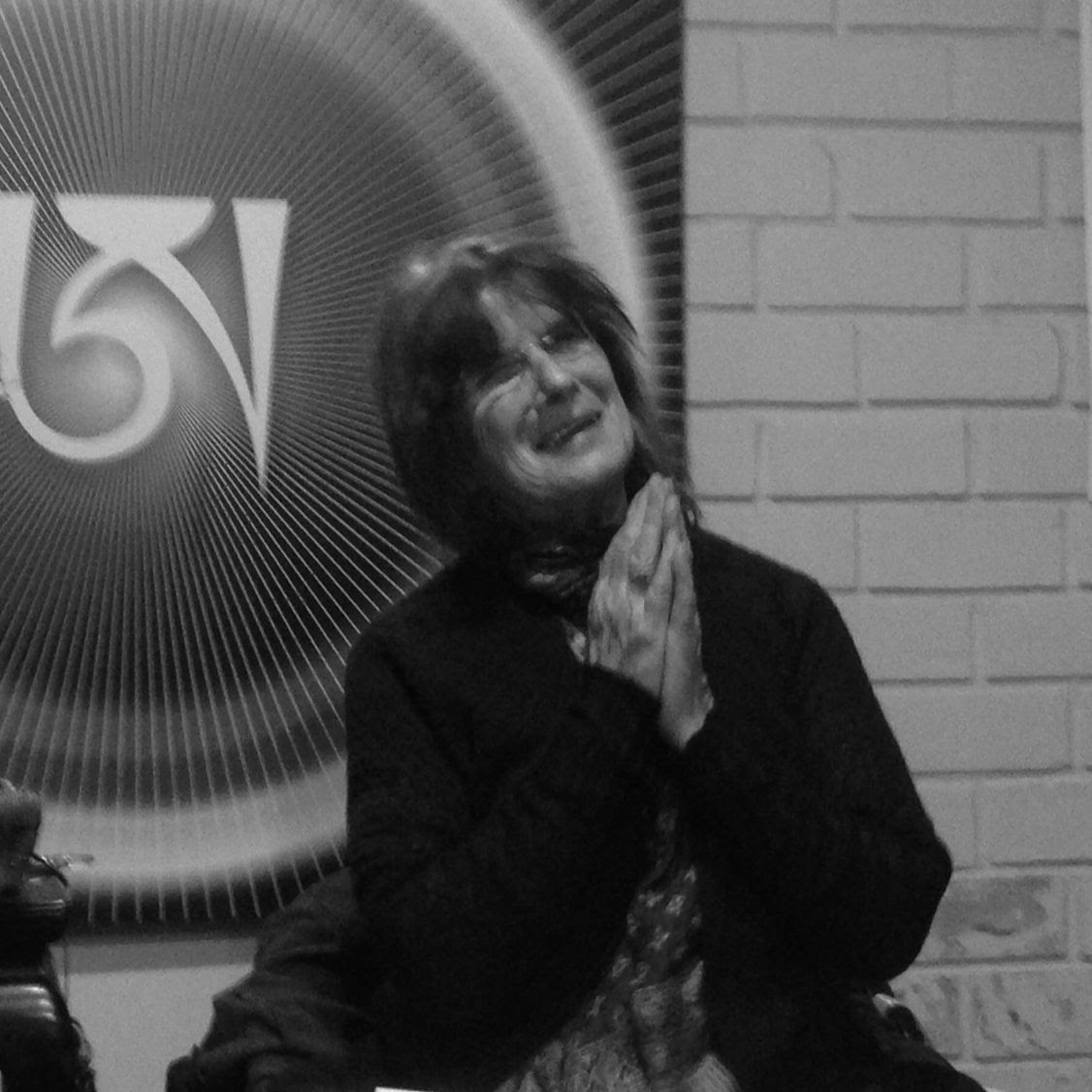
Alessandra Policreti teaching in Dzamlingar

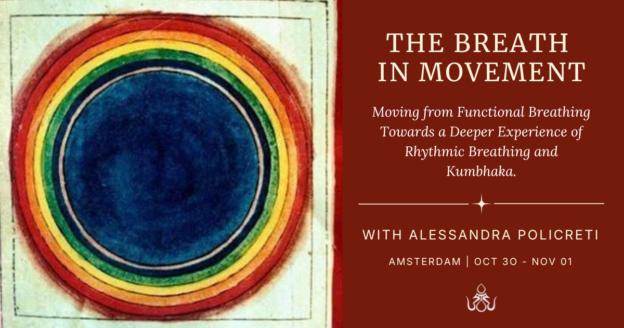
The Breath in Movement: optimising breathing performance, training for health and setting the foundation for contemplation practice.

AMSTERDAM OCT 30TH – NOV 1TH

Moving from Functional Breathing Towards a Deeper Experience of Rhythmic Breathing and Kumbhaka

Integrating the science of the Buteyko, Oxygen Advantage, and Respira Evolution methods with the ancient tradition of Yantra Yoga, Pranayamas and Rhythmic Breathing, to understand and experience deeply an improved breathing performance, greater mental and physical health, and stability in presence and awareness.

REGISTER HERE

PROGRAMME

scroll down for a more detailed version of the daily contents

The programme is offered in 2 parts – a public one, and one dedicated exclusively to those who have received Dzogchen Transmission.

Open part (Friday and Saturday): an exploration of functional breathing and the principles of Complete and Fluid Breathing, integrating elements from the Buteyko and Oxygen Advantage Methods, Respira Evolution and Yantra Yoga. Through awareness, diaphragmatic work, ribcage mobility and rhythmic breathing, participants will develop a smoother, more efficient and more integrated way of breathing.

Reserved part (Sunday): For practitioners who have received the Dzogchen transmission. A dedicated day for deepening our understanding of Kumbhaka and Barlung through the practice of Rhythmic Breathing.

FOR WHAT AND FOR WHOM

The course is adapt for beginners as well as advanced practitioners who want to deepen their understanding and practice:

HEALTH: individuals wanting to improve their health and professionals helping individuals improving their health. Learn to adopt effectively breathing practice to improve mental health (anxiety, mental fog, depletion, agitation) and physical health (physiologic, metabolic, cognitive, muscular). The course will cater also for seniors, people with reduced mobility and their specific condition.

SPORT AND PERFORMANCE: for those who wish to enhance their clarity and breathing awareness and efficiency to increase their performance (in every day life or in sports); adapt for both athletes and trainers.

MINDFULNNESS, CONTEMPLATION AND PRACTICE WITH PRESENCE: for more experienced practitioners who want to deepen their experience in meditative practice through the foundation of breath. This stream will develop all the way to the Sunday’s reserved session, dedicated exclusively to practitioners of Dzogchen who have received transmission from the lineage. The teachings that will be shared (Kumbhaka and understanding of Barlung) are very specific and require handling with care, both by the instructor and the students.

The Teacher
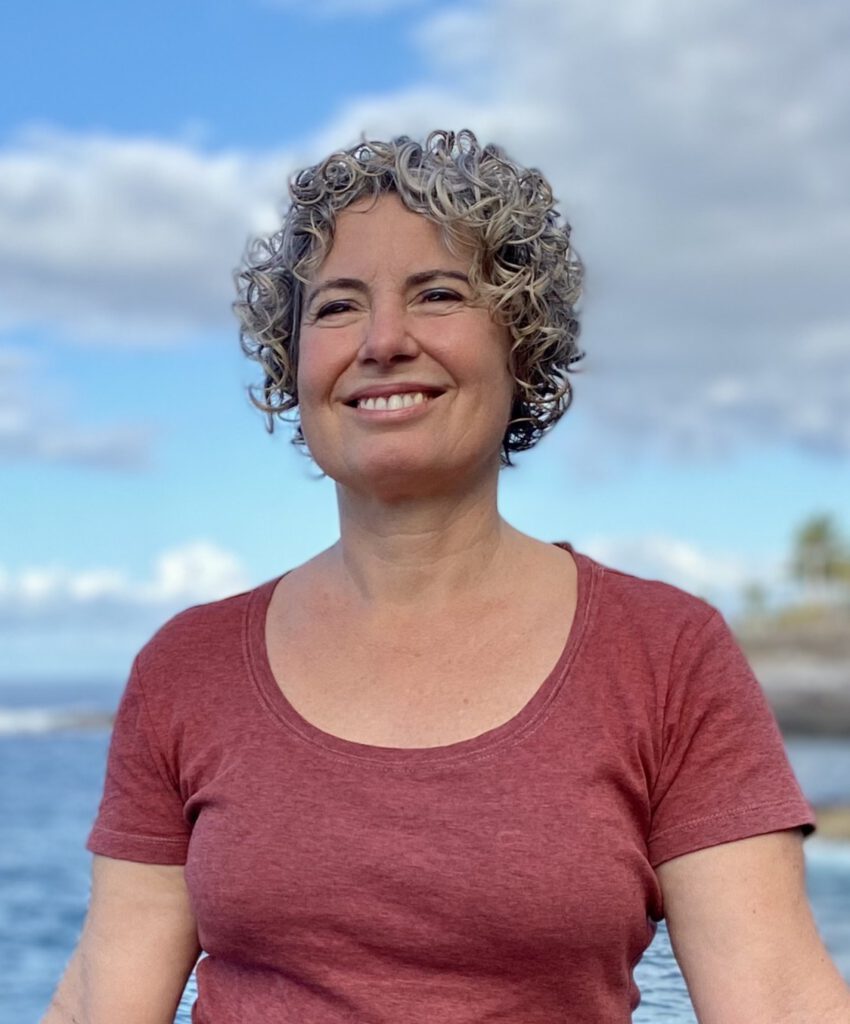
Alessandra Policreti has been practicing Yantra Yoga for over 25 years. She trained with direct students of the Tibetan master Chögyal Namkhai Norbu, who granted her teaching authorization. Developing her practice through 15 years of teaching, today she is a second-level Yantra Yoga Teacher. She is an an advanced Oxygen Advantage® instructor and developing her training in the Buteyko Method.

She is a mindfulness facilitator and was among the first teachers and instructor trainers of the Respira Evolution Method. For years, she has been guiding people to improve their health, energy, and well-being through mindful breathing.

Her approach is characterized by calmness, clarity, and precision, offering practical and accessible tools that can be easily integrated into daily life, fostering greater awareness, presence, and the quality of relationships.

DETAILED DAILY PROGRAMME

Friday evening — Awareness and Release. Introduction to functional and complete breathing, open to all: assessing our natural breathing pattern, releasing habitual tension, and a first taste of Complete and Fluid Breathing as taught through Yantra Yoga.

Contents:      

  • Introduction: what do we mean by functional breathing?
  • A simple assessment of our natural breathing pattern
  • Becoming aware of habitual patterns of tension and restriction
  • Introduction to Complete and Fluid Breathing, as taught through Yantra Yoga and the Respira Evolution Method
  • Exploring the movement of the diaphragm
  • Exercises to release unnecessary tension and improve diaphragmatic movement
  • Experiencing the breath as a three-dimensional, continuous movement
  • Short practice and integration

Saturday — From the Diaphragm to Fluid Breathing. Diaphragm and ribcage work in the morning; functional and rhythmic breathing in the afternoon, including an introduction to Rhythmic Breathing, the pranayama of Yantra Yoga.

Contents:

Morning: Diaphragm, ribcage and the movement of the breath

  • Revisiting the natural diaphragmatic movement
  • Understanding the relationship between diaphragm, abdomen and ribcage
  • Exercises for ribcage mobility and flexibility
  • Exploring the lateral and posterior movement of the ribs
  • Understanding how the breath can expand horizontally into the chest
  • Developing a smooth, continuous and fluid breathing pattern
  • Practising Complete and Fluid Breathing
  • Integration and relaxation

Afternoon | Functional breathing and rhythmic breathing

  • What makes breathing functional?
  • Nasal breathing and breathing volume
  • Exploring the relationship between breathing and the nervous system
  • Simple exercises from the Oxygen Advantage and Buteyko methods
  • Breathe Light
  • gentle, comfortable breath holds
  • developing awareness of air hunger
  • Bringing functional breathing principles into Complete and Fluid Breathing
  • Introduction to Rhythmic Breathing, the pranayama of Yantra Yoga
  • Practising the rhythm while maintaining a smooth, continuous breath
  • Understanding the relationship between movement, rhythm, breath and attention

Sunday — From Rhythmic Breathing to Kumbhaka. A dedicated day on Kumbhaka and understanding of Barlung through Rhythmic Breathing. As many of you will know, given the nature and power of these practices, this day is only for those who have received direct introduction from a Dzogchen lineage holder. If you haven’t yet had this transmission and would like to know more about receiving it, please reach out — we’re glad to help you find the way there.

Contents:

Morning: Understanding Kumbhaka

  • What is kumbhaka?
  • Kumbhaka in the context of Yantra Yoga
  • Why holding the breath is not simply about “holding your breath”
  • Exploring the relationship between breath, prana and attention
  • Simple exercises from Yantra Yoga and the Respira Evolution Method to understand the sensation of directing and containing the prana below the navel
  • Developing stability and containment without unnecessary tension
  • Practice

Afternoon: Deepening Rhythmic Breathing

  • Revisiting the structure of Rhythmic Breathing
  • Understanding the different phases of the breathing cycle
  • Working with higher counts
  • How rhythm, breath and retention relate to one another
  • Can Kumbhaka arise naturally? Introduction to Barlung
  • Exploring the internal experience of the practiceA longer guided practice
  • Questions and integration

WHERE

onsite and online

COST

Attendance to the open section of the programme (Friday 30th, Saturday 31st):

  • Onsite: €135 for the entire weekend course, €120 Early Bird (register before Sept 30th) with discounts of30th) with additional discounts of 20%, 50% and 80% for members of IDC
  • Online: €100 for the entire weekend course, 10% discount for Early Bird (register before Sept 30th)
Attendance to the full programme (including Sunday 1st)

  • Onsite: €220 for the entire weekend course, €198 Early Bird (register before Sept 30th) with additional discounts of 20%, 50% and 80% for members of IDC
  • Online: €100 for the entire weekend course, 10% discount for Early Bird (register before Sept 30th)

REGISTER HERE

Mandarava Long-life Practice, Chüdlen and Tsalungs retreat | Nina Robinson |

We are happy to invite you to the retreat Mandarava Long-life Practice, Chüdlen and Tsalungs in 23rd – 27th October 2019 with Nina Robinson at Rangdrolling, Amsterdam.
During the retreat we’ll try to learn something about all the different aspects of this practice: its meaning and benefits, the symbolism of the mandala, the melodies, mudras and use of ritual instruments.
We’ll also practice the Sogtig breathing for the Chudlen practice and, if time, some Tsalungs as taught by Rinpoche in the 2018 Mandarava Drubchen retreat in Dzamling Gar, Tenerife.
*****
We’ll start the retreat at 6.30 in the evening of 23rd October 2019 with a Ganapuja of Mandarava.
On the following days there will be explanations and practice 10 – 12 am and 3.30 – 5.15 pm, leaving space in the evening for Yantra Yoga and/or Dance of Vajra, or Khaita. Sessions will be more or less 2 hours
**********

The Mandarava Long-life, chüdlen and tsalung practices come from the Longsal Teachings of Chogyal Namkhai Norbu.
They belong to the Upadesha series of Dzogchen.

The following are words of Rinpoche extracted from various teachings.

“The Tibetan word for Upadesha is Men-ngag. Ngag means voice; men is the negative. That means these teachings should be kept secret; when practitioners receive these teachings they shouldn’t talk about them everywhere and use them everywhere; they should keep them secret.”

“The practice of Mandarava is a path for having total realization and also, relatively, for having a longer life and prosperity. But the main point is to attain realization of the state of Mandarava.
“Another characteristic of Men-ngag methods is that they are more effective and lead to quicker realization. Of course you need a concrete base for that. If you have that base, when you receive the teaching and do the practice in the correct way you can have quicker realization.”

“The Tsalungs are specific methods ….. for applying how to integrate into a state of contemplation through channels and chakras.”

“In the Dzogchen teachings it is considered important to at least do the most simple form of Chüdlen because it is a great help in the development of clarity.”

NINA ROBINSON’s BIO:

Nina Robinson was born in England in February 1937. She has done many different kinds of work, including raising a family, making ceramics and teaching it. After briefly following various Buddhist teachers she met Chögyal Namkhai Norbu and attended the teachings he gave in June 1980 in a camping retreat he gave in northern Italy. She was very fortunately able to follow many of his teaching and practice retreats from that time until the present day. She moved to Italy in 1986 and has lived near Merigar since then. She was secretary of Merigar for 7 years. She has also helped in transcribing, translating and editing many books of Shang Shung Editions.
Since 2002 she has been invited to lead retreats in many parts of the world.

Diet Advice just in case you want it
The diet Rinpoche recommended for those wishing to do strict Chudlen practice:
well-cooked grains such as wholegrain rice, barley, oats (no wheat); raw butter; honey; a little ripe fruit and cooked vegetables – all in small quantities and nothing after 6 o’clock in the evening.

Second level: those who need it can also eat some beans; fish; yogurt (only in the first half of the day) and cornflakes and milk in the evening.

Third level can add some cheese, fish and chicken etc.
People who have a lung imbalance will need more substantial food.
Drinks: good boiled water, some fruit juice, roasted barley drink, some herbal teas. Those who cannot give up tea and coffee should drink it very weak and not often.

Rinpoche said you should not smoke anything while you are doing Chüdlen.  He says that if you normally smoke you should stop for the whole time you are doing Chüdlen retreat.
Of course you shouldn’t use any kinds of heavy drugs or alcohol.

Location: Rangdrolling (Overbrakerpad 2, 1014 AZ Amsterdam)
Registration via email: info@rangdrolling.nl
IBAN: NL72INGB0006065880 with mention Mandarava retreat
Price: Sustaining € 95 -; Ordinary € 130 – ; Non-Members € 145 –
Early Bird Price: Sustaining € 80 -; Ordinary € 110 – (before October, 1)
*in case of financial troubles please contact  info@rangdrolling.nl

Open Yantra Yoga Course Spring 2018


Registration Yantra Yoga Open Course – Deadline 4th May

This is an Introduction Course to Yantra Yoga with Marc van Westreenen, organized specially for newcomers and beginners

One of the most ancient recorded systems of yoga in the world, Yantra Yoga was
first taught in Tibet in the eighth century. It has been preserved in its unadulterated form to this day, and as an excellent method for attaining optimal health andrelaxation is just as relevant for the contemporary world. Emphasizing the coordination of breath and movement, Yantra Yoga helps us learn meditation through experience.

Chögyal Namkhai Norbu, an eminent Tibetan scholar and Dzogchen master, first began to teach Yantra Yoga to Western students in the early 1970s. Courses are now taught all over the world by a growing number of instructors accredited in a rigorous training and examination process supervised by the two main instructors
appointed by Chögyal Namkhai Norbu, Fabio Andrico and Laura Evangelisti.

1st WEEKEND

Friday, 25 May 1 session 20:00-22:00
Saturday, 26 May 2 sessions 10.00- 12.30 & 15.00 – 17.30

2nd WEEKEND

Friday, 8 June 1 session 20:00-22:00
Saturday, 9 June 2 sessions 10.00- 12.30 & 15.00 – 17.30

This course consists of two weekends and it covers the preliminary practices of Yantra Yoga. You will learn:

· Basic warm-up exercises

· Nine purification breathings – is a pranayama used for exhaling the stale air at the beginning of our practise , it also trains for complete breathing.

· Tsigjong. In Tsigjong we work with the joints and the sense doors. It is made up of 5 movements combined with rapid breathing.

· Lungsang. Main part of the course is a set of 8 exercises called Lungsang, or purifying the prana. Each movement teaches a different way of breathing or retention of the breath. By learning Lungsang we are introduced to one of the main characteristics of Yantra Yoga: The breathing guides the movement, and the movements shape the breathing.

· Tsandul. Last part of the preliminaries practices is Tsandul.
Tsandul has two parts, a pranayama and 5 movements. These exercises prepare and train the channels for more advanced Yantra’s and breath-work.

If you are interested to learn more about Yantra Yoga then it is the best to follow both weekends. Then you will receive the complete preliminaries and you have a base for deepening your practise.

*This is a rare oportunity to learn Tibetian Yoga of movement. There probably won’t be organised other beginner’s courses any soon (by us).

Location: Veemarkt 151, 1019 CC Amsterdam
Price: Course (2 weekends – 6 sessions) – 100 euro
1st weekend (3 sessoons) – 65 euro with a possibility to join 2nd weekend for 45 euros
Deadline: 1st May
Registration: info@rangdrolling.nl

For general information about Yantra yoga: http://www.yantrayoga.net/

Yantra Yoga helps coordinate body, energy, and mind while making us more
balanced and free from tension. When we have a more relaxed mind, it is possible to
have a better, more harmonious, and healthy life.
– Chogyal Namkhai Norbu

If you have any questions or you know that you are going to join the course for sure, please let us know: contact us!

Gakyil of Rangdrolling

UPDATED | 7th Lojong Retreat May 10-13 with Zoltan Cser

The 7th Lojong involves training in the state beyond thought by means of pleasure and emptiness, training in the state beyond thought by means of clarity and emptiness, and training in the ultimate nature of phenomena completely beyond thought. Zoli would like to give an experimental retreat, where we are focusing to the practice. The 7th Lojong is the supreme method in order to start on the path of contemplation, with this practices we can gain experience about a pure instant presence, beyond mind. . Tummo means inner heat, and also related with a method of 7th Lojong. With Tummo we can find meditative stability through joy and emptiness, so this is a very important practice. Beside sitting we will do different practices, breathing, doing Yantra Yoga, and dance of the 12 A .

May, 10
10.00 – 13.00
15.00 – 18.00

18:30 Chöd (Everybody is welcome!)

May, 11
10.00 – 13.00
15.00 – 18.00

18:30 Chöd (Everybody is welcome!)

May, 12
10.00 – 13.00
15.00 – 18.00

18:30 Chöd (Everybody is welcome!)

May, 13
10.00 – 13.00
15.00 – 18.00

After retreat time we finish with Chöd, so the ones who can’t participate can come and join Chöd practice with everybody. Please come!

Location: Rangdrolling (Overbrakerpad 2, 1014 AZ Amsterdam)
Registration via email: info@rangdrolling.nl
IBAN: NL72INGB0006065880 with mention 7th Lojong Retreat
Price: sustaining € 85.-  ; ordinary € 130.-
Early bird price: sustaining € 55.-  ; ordinary € 110.- (before 25th April)

Zoltan’s BIO:

Zoltan “Zoli” Cser comes from Hungary, he was working as a vicerector at the Dharmagate Buddhist College in Budapest, now he is director.

He started to practice Buddhism in 1986 in a Chan lineage, he met our Master Chögyal Namkhai Norbu first time in 2002.

Zoli is the member of the International Dzogchen Community continously from 2004. In 2013 he became second level Vajradance instructor, in 2015 SMS Base instructor  and in 2016 Yantra Yoga second level instructor.

If you have any questions: contact us!

Gakyil of Rangdrolling